


The EU Machinery Regulation will apply from 20 January 2027, and its impact will extend beyond just engineering and conformity assessment. Companies selling machinery across Europe will need to ensure that instructions, warnings, declarations and digital documents are accurate, understandable and properly maintained in the languages required by each market. A reliable localisation workflow will be essential for keeping information consistent, and taking action now can help reduce costs, pressure and complexity as the application date approaches.
Below, we examine the Regulation’s key language requirements, the documentation challenges companies need to address and the steps they can take before 2027.
What is the EU Machinery Regulation?
Regulation (EU) 2023/1230 is the EU’s new legal framework for machinery and related products. Adopted in June 2023, it will replace the Machinery Directive 2006/42/EC, which has formed the basis of EU machinery safety legislation for almost two decades. Although the Regulation has already entered into force, most of its provisions will apply from January 2027.
Like the existing Directive, the Regulation has two closely connected purposes: to protect people from risks associated with machinery and to support the free movement of compliant machinery within the European single market. By replacing the Directive with a directly applicable Regulation, the EU is aiming to create a clearer, more consistent rulebook for machinery manufacturers operating across Europe.
The update also reflects how much machinery has changed since the current Directive was adopted. As the European Commission’s explanation of the proposed legislation sets out, modern machinery may incorporate connected systems, autonomous functions, artificial intelligence, machine learning and software that can change after a product enters service.
The Regulation covers machinery, related products and partly completed machinery. Its scope extends from industrial equipment, production lines and lifting accessories to robotics, safety components and machinery that incorporates self-evolving machine-learning systems.
What are the translation and localisation implications?
Multilingual documentation requirements are not entirely new. Machinery sold under the existing Directive already needs to come with the appropriate instructions and safety information for its intended market. However, the new Regulation reinforces these obligations and places them within a more digital, interconnected and evolving documentation environment. For companies manufacturing, distributing and marketing machinery, this means:
Instructions must be understandable in the relevant market
Manufacturers must ensure that machinery and related products are accompanied by instructions for use, safety information and the relevant information specified in Annex III of the Regulation. This content must be in a language that users can easily understand – and it is up to each individual Member State to determine which language or languages will be required in its territory. Information must also be clear, understandable and legible in all cases.
There is therefore no single language policy that can be applied automatically throughout the EU. Companies need to identify the requirements of every market in which their machinery will be sold or put into service. As a result, an English source manual alone will not necessarily meet the requirements in Germany, France, Spain, Italy, the Netherlands or the Nordic countries – at least not without translation, localisation and/or amendment.
The wording of the Regulation also attaches significant importance to quality. Providing text in the correct language is not enough if that text is ambiguous, difficult to follow or poorly presented. Machinery translation must communicate complex operating procedures and safety information in language that the intended user can genuinely understand. This means that relying on unreviewed AI output or non-specialist translation services may create avoidable risks, particularly where safety-critical information is involved.
Warnings and user-facing information must be clear and accurate
The language requirements extend beyond conventional manuals. Written and recorded information and warnings on the machinery must be expressed in a language users can easily understand. The information needed to control the machinery must be unambiguous, while visual displays and other interactive forms of communication must be easy to understand and use.
Depending on the product, localisation may therefore need to cover:
- warning texts and safety labels
- control panels and display messages
- embedded software and human–machine interfaces
- operating, installation and maintenance instructions
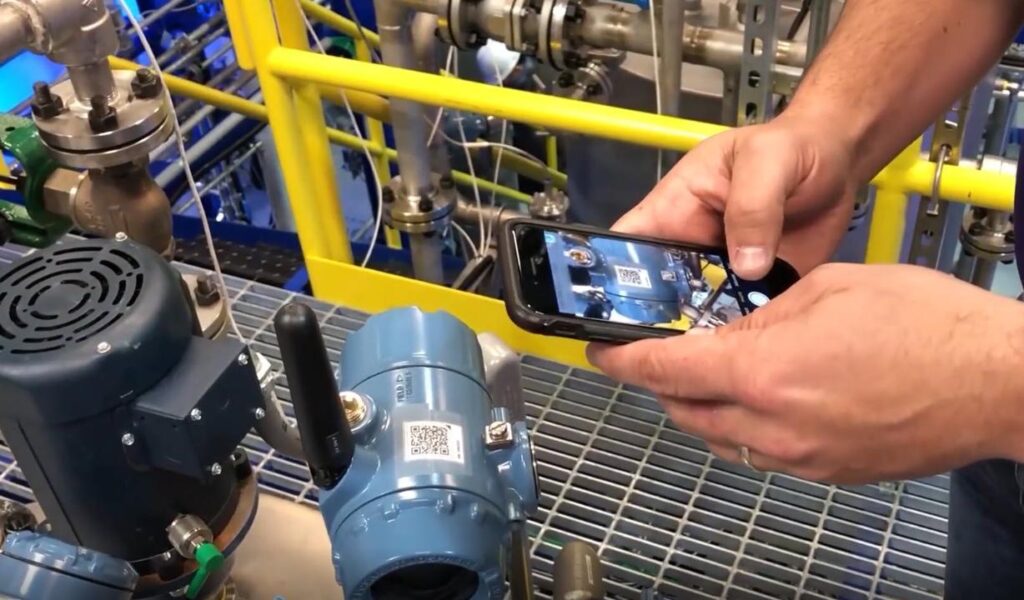
- information accessed through QR codes or documentation portals
- product identification and manufacturer or importer contact information
The Regulation encourages the use of readily understandable symbols and pictograms, but these do not always eliminate the need for language. Any accompanying wording must still be appropriate for the people who will operate, install or maintain the machinery.
Declarations must be translated and kept updated
Under Article 21 of Regulation (EU) 2023/1230, EU declarations of conformity must be translated into the language or languages required by the Member State in which the machinery will be supplied or put into use. Significantly, the Regulation also states that these declarations must be continuously updated.
Comparable requirements also apply to partly completed machinery. Article 22 requires EU declarations of incorporation to be kept up to date and translated into the languages required by the relevant Member State. Under Article 11, moreover, assembly instructions must also be clear, understandable and legible, and provided in a language that can be easily understood by the person incorporating the partly completed machinery.
This makes version management particularly important. When product details, standards, company information or regulatory references change, companies must be able to identify every affected declaration and update the corresponding language versions without introducing discrepancies.
Digital instructions create new opportunities and responsibilities
One of the most visible changes is the formal acceptance of digital instructions. Manufacturers may provide instructions digitally, but they must clearly indicate how users can access them. Users must be able to download, print and save the instructions so they remain available, including in the event of a mechanical breakdown. The online version must generally remain accessible throughout the expected lifetime of the machinery and for at least ten years after it is placed on the market.
Users can still request a paper copy at the time of purchase, and this must then be supplied free of charge within one month. For machinery that is intended for non-professional users, or which could reasonably be used by non-professionals, essential safety information for putting the machinery into service and using it safely must be supplied on paper.
Digital delivery can make multilingual documentation more accessible and easier to update, but only when the underlying workflow is well controlled. Companies need to know which document version applies to each model, market and language. They must also ensure that links, QR codes, portals and embedded files continue to direct users to the correct and current information.
Language obligations affect the wider supply chain
Translation is not solely a concern for manufacturers. Before making machinery available, distributors must verify that it is accompanied by the required instructions and information in a language that users in the relevant Member State can easily understand.
Manufacturers, importers and distributors may also need to provide information and documentation to national authorities in a language those authorities can easily comprehend. This does not necessarily mean translating the complete technical file proactively into every market language, but companies nonetheless need a reliable way of producing appropriate language versions when requested.
What do companies need to consider?
Machinery documentation has to do more than just satisfy a formal language requirement. It must help people install, operate, clean, maintain and repair equipment safely. That requires technical accuracy, consistent terminology, readable language and a clear understanding of the intended user.
Terminology is one of the most important considerations. The same components, controls, risks and procedures may appear across manuals, warning texts, declarations, software interfaces and product sheets. Without an approved glossary and effective terminology management, different translators or departments may inadvertently introduce inconsistent terms for the same concept. In safety-critical documentation, that inconsistency can cause genuine confusion and may have potentially critical consequences.
Source-content quality matters too. Ambiguous or inconsistent source documentation becomes harder to translate accurately, particularly when sentences depend heavily on internal product knowledge. Reviewing and standardising the source before translation can improve every subsequent language version.
Companies also need to consider:
- who owns and approves the source content
- which documents apply to each product model
- which languages are needed in each market
- where existing translations and terminology are stored
- how updates are identified and communicated
- how translated content is reviewed and approved
- how digital and printed versions are kept aligned
These are good practices for any machinery manufacturer operating internationally. They support compliance, reduce the risk of outdated documentation and create a better experience for operators, technicians, dealers and distributors.
With the new Regulation just around the corner, now is the perfect time for companies to review and upgrade their workflows for documentation quality and localisation. Rather than treating 2027 as a one-off translation deadline, companies can instead use the transition to establish a scalable system for future product releases, documentation updates and regulatory changes. This will help them to improve user experience and safeguard compliance across the long-term, even as further developments and regulatory changes come into effect.
How can Comunica help?
Comunica possesses deep expertise within technical translation and can help machinery and industrial companies to manage the multilingual language layer of their technical documentation. We work with user manuals, instructions, safety information, warning texts, installation and maintenance guides, assembly instructions, declarations of conformity and incorporation, product sheets, digital manuals, documentation portals and more.
Our approach combines specialist human expertise with the latest and most cutting-edge translation technology. AI-supported tools, translation memories and automation help us process content efficiently and reuse previously approved translations. At the same time, experienced technical linguists and native-language reviewers provide the judgement needed to handle terminology, readability, context and safety-critical language.
We can also help you build a scalable workflow for speed, efficiency and consistency over time. This may include:
- reviewing your current documentation and language setup
- creating and maintaining technical glossaries
- establishing translation memories
- linking translation processes to your existing systems
- automating the transfer of content between platforms
- introducing linguistic quality-assurance checks
- coordinating reviews and approvals
- managing changes across all affected language versions
The right setup for you will depend on the volume and frequency of your documentation. For example, a company translating one manual into two languages will have different needs from a manufacturer managing hundreds of product variants across Europe. We provide consultation and workflow support to create a tailored process that will fit your systems, teams and markets.
We do not provide legal advice, CE-marking consultancy or the technical approval of machinery documentation. Your internal technical and regulatory specialists remain responsible for the underlying content and compliance decisions. Our role is to make sure that approved content is translated clearly, consistently and efficiently into the languages your markets require.
Preparing for 2027? Start with a review of your multilingual machinery documentation and localisation workflow. Book a free, no-obligation consultation today to discuss the next steps, or request a quick quote to get started right away..
This article provides general information and should not be treated as legal or regulatory advice.


