There’s something about the changing seasons that creates a real sense of anticipation in the Nordics.
As summer draws to a close, autumn isn’t simply something to put up with. It’s something to lean into.
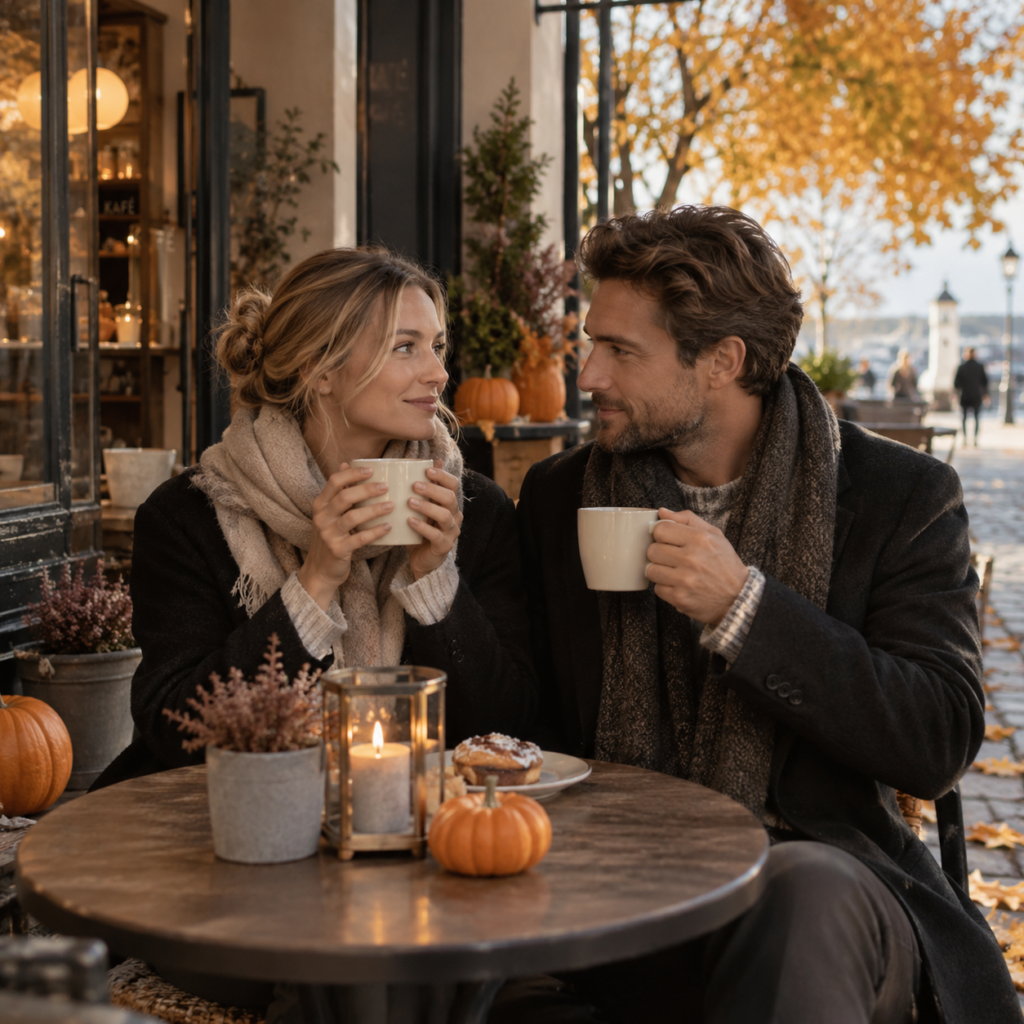
Candles come out. Evenings move indoors. Menus get warmer, wardrobes change and suddenly being wrapped in a blanket with a hot drink feels like an event in itself.
Naturally, the languages reflect that too.
In this article, we explore the Nordic words for autumn cosiness – and some other fun words and expressions associated with this dark yet often vibrant time of year.
Höstmys, Efterårshygge and Høstkos: Autumn Gets Cosy
One feeling, three wonderfully Nordic expressions:
🇸🇪 höstmys
🇩🇰 efterårshygge
🇳🇴 høstkos
They all describe, in slightly different ways, that particular cosiness associated with autumn.
The Swedish mys, Danish hygge and Norwegian kos extend far beyond one season. They can be used for everything from a quiet evening at home to coffee with friends. Norwegian, for example, happily produces compounds such as kaffekos, hyttekos and kveldskos (coffee cosiness, cabin cosiness and evening cosiness respectively).
But add autumn and the picture becomes immediately recognisable: candles, blankets, warm drinks, darker evenings and the pleasure of retreating indoors.
It’s also a feeling that businesses know very well how to tap into.
Fashion changes tone and texture. Restaurants introduce seasonal menus. Interior brands bring candles and blankets to the foreground. Hotels start selling autumn escapes. Marketing moves with a mood that consumers are already beginning to anticipate.
Where do the Names Come From?
As you may have noticed, the Swedish and Norwegian words (höst and høst) are similar – they both belong to an old Germanic family of words closely connected with the harvest.
In fact, the Swedish word originally meant harvest rather than simply the season. Its older form, höster, is related to Norwegian høst, Old Norse haust, German Herbst and — rather wonderfully — the English word harvest.
It makes sense. Before seasons were primarily associated with pumpkin spice lattes and autumn collections, this was the part of the year defined by bringing in the crops. As with many other languages, this activity gave its name to the season.
Danish took a different, more literal, path.
Efterår literally refers to the later part of the year. It was formed in contrast to forår, the earlier or first part of the year. In day-to-day speech, efter simply means after while år is year.
And efterår is actually a relative newcomer. Danish once commonly used høst for the season too. Efterår gradually replaced it and only became the usual term in the 18th century; høst survives today as a more poetic word for autumn, as well as in its agricultural sense.
Kura Skymning: Doing Nothing While the Light Disappears
One particularly lovely Swedish expression associated with the autumn is kura skymning.
Skymning means dusk: the period when daylight gradually fades after sunset.
Kura skymning is more specific. The Swedish dictionary describes it as sitting and resting or talking quietly while dusk falls.
There’s something wonderfully autumnal about that.
Rather than immediately switching on every light as the room begins to darken, you sit for a while in the half-light. Perhaps you talk. Perhaps you have tea. Perhaps you simply think quietly to yourself as you watch the day disappear.
Ruskevær: Because Autumn Isn’t All Candles
Not every autumn word is quite so romantic.
The Norwegian word ruskevær (or ruskväder in Swedish) refers to unpleasant, rough weather involving wind and often plenty of rain.
It’s the other half of the Nordic autumn picture: grey skies, wet pavements, wind, sideways rain and the moment when you realise summer really is over.
But perhaps ruskevær and høstkos belong together.
The worse it gets outside, the better the excuse to make things cosy indoors.
This contrast between the outdoors and indoors appears again and again in the way Nordic autumn is presented – and marketed.

Potato Break: When Autumn Meant Work
Then there are autumn words that preserve a completely different way of life.
Today, children across Scandinavia have an autumn school break:
🇩🇰 efterårsferie
🇳🇴 høstferie
🇸🇪 höstlov
But older names tell us what that break was once used for.
In Denmark, the autumn holiday was traditionally known as kartoffelferie — literally ‘potato holiday’. The name came from the practice of giving rural children time away from school so they could help bring in the potato crop. Danish children were still commonly helping with the harvest well into the 20th century.
Norway had potetferie for much the same reason, while Sweden used potatislov – and even lingonplockarlov, which means time off for picking lingonberries.
It’s a fascinating example of everyday vocabulary acting as a little piece of social history.
What is now associated with family trips, cosy days at home and autumn activities was once closely connected with the agricultural calendar – and with children being needed as extra labour.
The lifestyle has changed, but the rhythms of the calendar remain much the same.
The Language of a Season
None of these words exists in isolation.
They reflect the life around them: changing light, changing weather, older agricultural traditions and the very modern pleasure of making the darker months feel appealing.
That matters for businesses too.
Seasonal marketing is not simply a matter of translating ‘autumn collection’ into three different languages.
What does autumn mean in that market? When do people begin anticipating it? What traditions, memories and behaviours come with it? Which words feel natural – and which feelings are brands already tapping into?
A hotel might sell the pleasure of escaping into nature before winter arrives. A fashion brand might focus on layering, texture and changing weather. A food brand can move towards warmth, seasonality, and that very human need to indulge in something cheerful as the light fades away.
The language is part of a much bigger cultural shift that happens every year.
And that’s one of the things we love about localisation.
It’s not only knowing what the words mean.
It’s knowing when they mean the most.
Want to communicate more naturally with customers across the Nordic markets?
At Comunica, we combine language expertise with a deep understanding of the cultures behind the languages. Visit our services page to learn more about how this works in practice.