All of the Nordic countries have a national day, but they all take different forms. Some are quiet and marked by reverential tradition, while others are rowdy and family-focused. Most are summer-time affairs, while the Finnish national day is held in December against a more sombre backdrop. Some are steeped in mythology and symbolism, while others take on a more political nature. Read below to learn more about the different national celebrations in the Nordic countries.
Norway (17 May)
In Norway, 17 May (or Syttende Mai) marks the signing of the Norwegian Constitution at Eidsvoll in 1814. Although Norway subsequently entered a union with Sweden, the constitution became a powerful symbol of national self-determination and laid the foundations for the country’s democratic traditions.
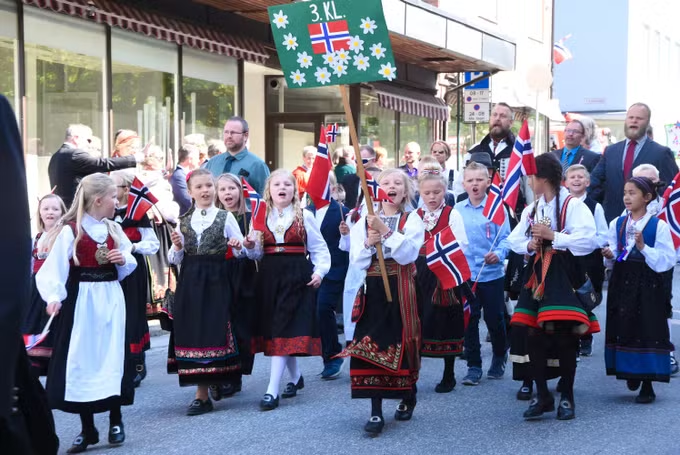
The day is celebrated with lively children’s parades (barnetog) in towns and cities across the country. Schoolchildren march through the streets carrying Norwegian flags, accompanied by marching bands and singing patriotic songs, often passing local dignitaries and members of the royal family. Many people also wear traditional regional dress known as a bunad, and families gather to enjoy food, ice cream and festivities while sharing in a strong sense of community.
The significance of the day lies in how it reflects Norway’s democratic values and peaceful national identity, with a celebration that places people – and especially children – at its heart. Unlike many national days around the world, it avoids military displays and instead highlights unity, freedom and shared cultural pride.
Denmark (5 June)
In Denmark, 5 June marks Constitution Day (Grundlovsdag), commemorating the signing of the Danish Constitution in 1849. The constitution transformed Denmark from an absolute monarchy into a constitutional monarchy and established many of the democratic principles that continue to shape the country today.
The day is marked by political speeches, public meetings and community events held across the country. Politicians, organisations and local groups often gather to discuss current issues and celebrate Denmark’s democratic traditions. Unlike many other national celebrations, however, Constitution Day is generally a relatively low-key affair. Danish flags can be seen flying, but large parades and mass festivities are uncommon. The date also coincides with Father’s Day in Denmark, giving it a more informal and family-oriented character for many people.
The significance of Constitution Day lies in its focus on democracy, civic engagement and political participation. While it is not officially Denmark’s national day, it remains one of the country’s most important civic observances and serves as a reminder of the constitutional rights and freedoms enjoyed by Danish citizens.
Sweden (6 June)
In Sweden, National Day (Nationaldagen) is celebrated on 6 June and commemorates two important events in the country’s history that occurred on the same date, but centuries apart.
The first was the election of Gustav Vasa as king in 1523, an event that marked the foundation of modern Sweden and its emergence as an independent state. The second was the adoption of a new constitution in 1809, which helped shape Sweden’s system of government and the country’s democratic development.
Despite this double significance, national day in Sweden is a low-key affair. Largely because it gets overshadowed by Midsommar – which is a more long-standing, popular and deeply rooted moment in the Swedish cultural calendar that occurs just a few weeks after.
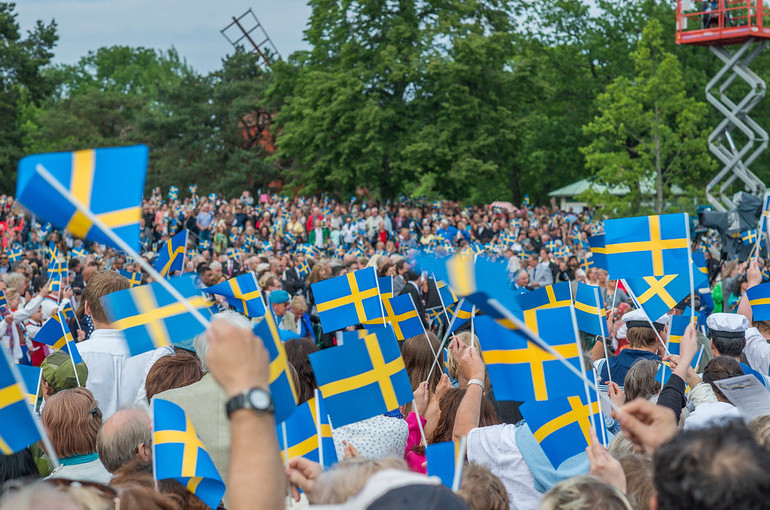
The best-known celebration on National Day takes place at Skansen in Stockholm, where official ceremonies are attended by members of the royal family and broadcast nationwide. Across the country, municipalities also host flag ceremonies, concerts and citizenship ceremonies for new Swedish citizens.
Iceland (17 June)
In Iceland, National Day (Þjóðhátíðardagurinn) is celebrated on 17 June and marks the country’s independence from Denmark in 1944. The date was chosen to coincide with the birthday of Jón Sigurðsson, the leader of Iceland’s 19th-century independence movement and one of the nation’s most revered historical figures.
National Day is marked by parades, outdoor concerts, speeches and community celebrations across the country. Streets are decorated with Icelandic flags, while families and visitors gather to enjoy the festive atmosphere.
One of the most distinctive traditions of the day is the appearance of Fjallkonan (‘the Lady of the Mountain’), a symbolic female figure who represents Iceland itself. Dressed in traditional Icelandic costume, she takes part in official ceremonies and recites poetry or delivers a message to the nation. Her presence gives the celebrations a uniquely Icelandic character and provides a powerful link between the country’s past and present.
Finland (6 December)
Finland’s Independence Day (Itsenäisyyspäivä) stands apart from the other Nordic national celebrations in one obvious respect: it is the only one held in winter. Celebrated on 6 December, it marks Finland’s declaration of independence from Russia in 1917. The date reflects a pivotal moment in Finnish history and falls during the country’s darkest season, giving the day a more solemn and reflective atmosphere.
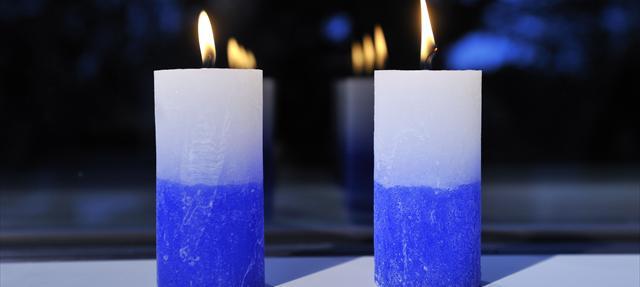
Across Finland, the day is marked by flag-raising ceremonies, visits to war memorials and moments of remembrance for those who fought to preserve the nation’s independence. A particularly cherished tradition is the lighting of two candles in windows – a custom associated with patriotism, remembrance and national unity.
One of the most famous aspects of Independence Day is the Presidential Reception held in Helsinki. Hosted by the President of Finland and attended by invited guests from across Finnish society, the event is broadcast live on television and watched by millions of Finns each year. Although celebrations are generally more restrained than those of Norway, Iceland or Sweden, the day holds profound significance as a tribute to Finland’s independence, resilience and national identity.