Christmas might be the season of giving, but it’s also the season of spending. And in the Nordic countries, where festive celebrations are taken seriously, the numbers can be eye-watering.
In 2026, Norwegian retailers are expecting nearly NOK 152 billion in sales across November and December. In Sweden, December sales alone are forecast to exceed SEK 100 billion. And even in Finland, where consumer confidence remains shaky, retailers are looking forward to a brighter Christmas compared to previous years.
As we have considered in another recent article, however, Nordic consumers are increasingly strategic about how they spend their money. They’re hunting down discounts, planning purchases earlier and thinking carefully about which gifts are worth buying. Some are even cutting back on everyday treats to leave more room in their budgets for Christmas-related expenses.
All this raises some interesting questions: How much do the Nordics spend compared with the rest of Europe? What’s changing in 2026? And where are the biggest opportunities for businesses looking to attract Nordic customers?
Let’s unwrap the numbers.
How Much Do the Nordics Spend on Christmas?
The Nordics are among Europe’s wealthiest consumer markets, and Christmas presents a particularly lucrative opportunity for retailers.
In a cross-European study by YouGov from 2018, Norway and Denmark emerged as the biggest festive spenders, with average budgets of €515 and €491 respectively. That’s considerably more than France (€366), Germany (€303) or Italy (€271). Sweden (€350) and Finland (€326) also outspent several major European markets.
But as we can see, while consumers in all five Nordic nations tend to spend more at Christmas, there are substantial differences between the countries themselves.
According to a study published by Nordregio in 2025, Norwegians devoted the largest share of their monthly disposable household income to Christmas gifts (10.95%), followed by Swedes (8.57%), Finns (8.25%) and Icelanders (7.91%). Denmark came last at 7.56%, despite being one of the region’s wealthiest countries – showing that cultural factors and other motivations figure into the equation beyond simply income alone.
Both studies draw on historical data, but they highlight an important point for international retailers: the Nordics offer considerable spending potential, while purchasing habits and priorities can differ significantly from one market to another.
Christmas 2026: More Spending, but Not Without Reservations
Across Europe, the outlook for Christmas 2026 is relatively upbeat.
Mastercard Economics Institute forecasts a 3.4% increase in European retail sales between 1 November and 26 December, excluding automobiles and fuel. The Nordic forecasts are similarly encouraging.
In Norway, retail organisation Virke expects sales of NOK 151.7 billion across November and December, representing 4% growth over 2025. Of that total, approximately NOK 24.2 billion is attributed to additional Christmas-related purchases, including gifts, festive food, clothing and decorations.
Meanwhile, Sweden’s HUI Research forecasts December retail sales of approximately SEK 104 billion, up 3% in value. Interestingly, sales volumes overall are expected to grow by 6%, partly reflecting lower food prices. In Finland, the Finnish Commerce Federation also expects Christmas sales to increase, helped by improving purchasing power and stronger domestic e-commerce.
Denmark presents perhaps the most intriguing picture of all. Despite consumer confidence falling sharply in October, retail sales continued to grow. Dansk Erhverv reported that Danish retail sales had risen by approximately 4.5% over the preceding year. So while financial pressures are very much on consumers’ minds, these concerns aren’t translating directly into lower spending just yet.
A September survey commissioned by Sambla Group found that 23% of Norwegians were particularly concerned about the cost of Christmas and other festive celebrations, compared with 17% of Swedes and 14% of Finns.
For retailers, this combination of spending appetite and financial caution presents an interesting challenge. Consumers are prepared to spend, but they’ll want to feel they’re getting their money’s worth. That makes a convincing value proposition all the more important. Competitive pricing is one way to win customers over, but product quality, durability and practical benefits can be just as persuasive, particularly for brands competing at the premium end of the market.
What’s Going Under the Tree?
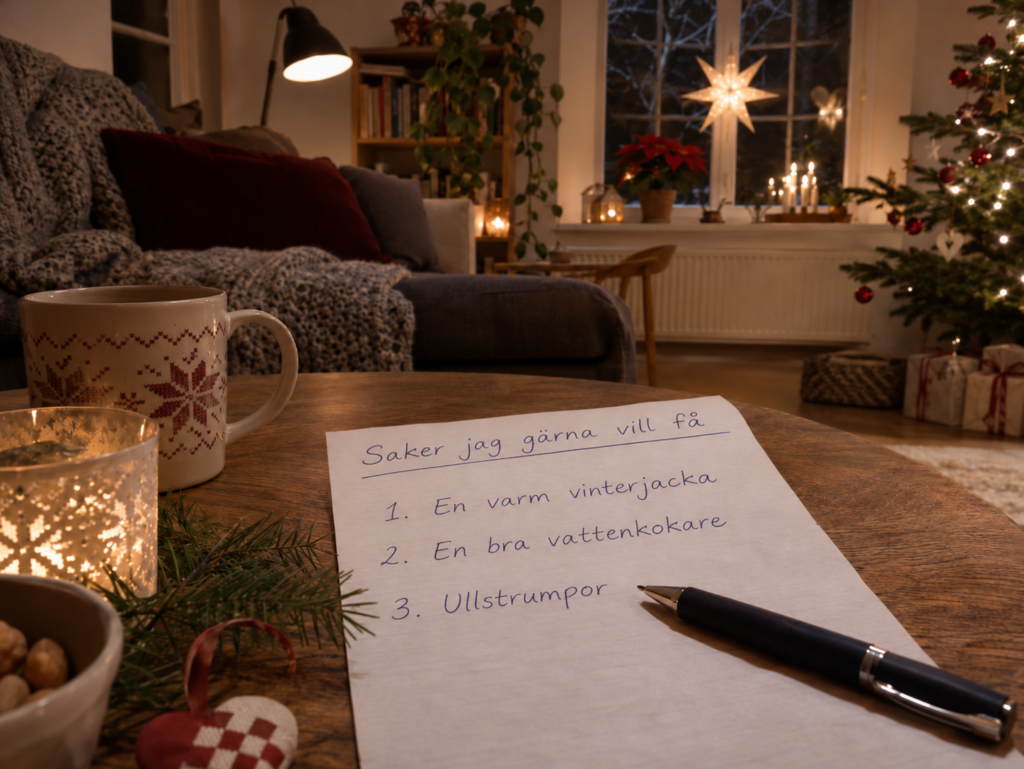
A good Christmas present doesn’t necessarily need to come with a hefty price tag. Research suggests that Nordic consumers are conscientious gift-givers, placing considerable emphasis on choosing something the recipient will genuinely appreciate.
A November 2026 survey by Finnish retailer Prisma found that the recipient’s wishes were the most important consideration for 60% of shoppers, followed by necessity (56%), price (49%) and usefulness (47%). Clothing topped the list of planned gifts (47%), followed by toys (46%), cosmetics (40%) and books and magazines (38%).
There’s evidence of similar attitudes elsewhere in the region. A 2025 Swedish survey by Åhléns found that most respondents valued personal, thoughtful gifts over expensive presents or famous brands. Meanwhile, a Norwegian studyrevealed that seven in ten consumers felt many of the Christmas presents they bought lacked real meaning.
These findings point towards opportunities for brands that can demonstrate the practical, personal or environmental value of their products. A durable, thoughtfully designed item that meets a genuine need may prove more appealing than an expensive novelty destined to gather dust.
For retailers, the lesson is to sell the value of the gift, not simply the product itself. Show how it fits into the recipient’s life, highlight its usefulness and longevity, and consider organising gift guides around people’s interests and needs rather than price alone. Where sustainability is a genuine selling point, support your claims with specific information about materials, durability or repairability.
The Great Christmas Bargain Hunt
Nordic consumers might be willing to splash out at Christmas, but that doesn’t mean they’re prepared to pay more than they have to. Discounts and special offers play an increasingly important role in festive shopping, with consumers planning ahead to make their budgets stretch further.
In Finland, a November 2026 survey by Prisma found that 74% of respondents planned to take advantage of promotional offers when buying gifts. Meanwhile, the proportion planning to shop during Black Month or Cyber Monday rose from 29% in 2025 to 34% in 2026.
A similar shift is taking place in Sweden, where HUI Research reports that November has become as important as December for non-food retail sales. In Finland, November has already overtaken December as the biggest sales month for household technology.
For retailers, the message is clear: Christmas shoppers are looking for value, and they’re prepared to plan their shopping around it. Brands should build interest ahead of major sales events, highlight genuine savings and make it easy for customers to compare products and prices.
And while early promotions are becoming increasingly important, the final weeks before Christmas still present opportunities. As delivery deadlines approach, clear shipping information, reliable fulfilment and reassurance that gifts will arrive on time can be just as persuasive as another discount.
What Are Nordic Consumers Cutting Back On?
The prospect of record Christmas sales shouldn’t obscure another reality: many households are actively looking for ways to save money.
A September 2026 survey by Sambla Group found that 40% of Finnish consumers would consider cutting back on eating out, shopping or entertainment to free up money each month. The equivalent figure was 34% in both Sweden and Norway. Norwegians were also particularly inclined to review recurring expenses, with 35% considering reductions in subscriptions and other fixed costs.
While these aren’t Christmas-specific cutbacks, they suggest that consumers are becoming more selective about discretionary spending. For businesses, the challenge is to demonstrate why a purchase is worthwhile. A restaurant, for example, might find more success promoting a memorable evening with friends than simply advertising an expensive meal.
Another significant development is the growing popularity of second-hand goods. In Denmark, Dansk Erhverv reported that sales of used products had risen by 26.3% over the preceding year, substantially outpacing retail growth overall.
For brands selling new products, this growing competition reinforces the importance of communicating lasting value. Quality, durability, warranties and repairability can all help justify a purchase, particularly when consumers are weighing up whether to buy something new or seek out a cheaper alternative.
And Then There’s New Year’s Eve…
Christmas might dominate the festive retail calendar, but the spending doesn’t necessarily stop once the presents have all been opened. New Year’s Eve brings a different set of opportunities, particularly for businesses in hospitality, entertainment, food and drink.
Just consider Denmark’s enthusiasm for fireworks. In December 2025, Dansk Erhverv estimated that Danish households planned to spend approximately DKK 500 million on fireworks for the 2025/26 New Year celebrations. Nearly three in ten households intended to buy them.
But it’s not just fireworks that attract spending. New Year’s Eve is a major occasion for entertaining at home, and consumers are willing to pay for a memorable celebration. In Norway, a 2025 survey by NHO Reiseliv found that 55% planned to celebrate with dinner or a party in a private home, compared with just 3% planning to visit a restaurant or bar.
And staying home doesn’t necessarily mean doing everything yourself. In Denmark, a survey by Arla Pro found that 22% of consumers had ordered takeaway or catering for their New Year’s celebrations, with convenience and the desire to treat guests among the main motivations being their purchases.

What Does All This Mean for Businesses Targeting the Nordics?
Taken together, the research paints a fascinating picture.
Nordic consumers are entering Christmas 2026 with more spending power than in recent years, but they’re using it thoughtfully. They’re planning earlier, looking for better deals and prioritising purchases that feel worthwhile.
For businesses looking to attract customers in these markets, three principles stand out.
First, timing matters. The festive shopping season now stretches well into November, with different product categories experiencing demand at different points. Understanding these patterns can help you decide when to launch campaigns, introduce offers and allocate marketing budgets.
Second, value needs to be communicated, not assumed. Whether you’re selling affordable gifts or premium experiences, make it immediately clear why your offer deserves a place in the customer’s budget.
And third, local relevance makes all the difference. The Nordics share many characteristics, but the research reveals meaningful differences in spending priorities, purchasing habits and consumer confidence. A campaign developed for one market won’t necessarily deliver the same results in another.
That’s where thoughtful localisation comes in.
The right words can make a discount feel exciting rather than desperate, an expensive product feel worth the investment, or an unfamiliar international brand feel like a trustworthy choice.
Got a Campaign in Mind? Let’s Make It Work in the Nordics.
Christmas is a particularly revealing moment in the retail calendar, but the lessons extend far beyond the festive season.
Whether you’re planning a last-minute Christmas promotion, preparing a New Year campaign or looking ahead to a product launch later in 2027, reaching Nordic consumers starts with understanding what makes them tick.
At Comunica, we help businesses turn that understanding into compelling, culturally relevant content. From campaign messaging and creative localisation to multilingual content workflows that combine AI efficiency with expert human insight, we make it easier to connect with customers in Sweden, Norway, Denmark, Finland and beyond.
Click here to book a chat or request a quote.